


-
TURKISH RUG AND CARPET WEAVING: STORIES TOLD BETWEEN THE THREADS
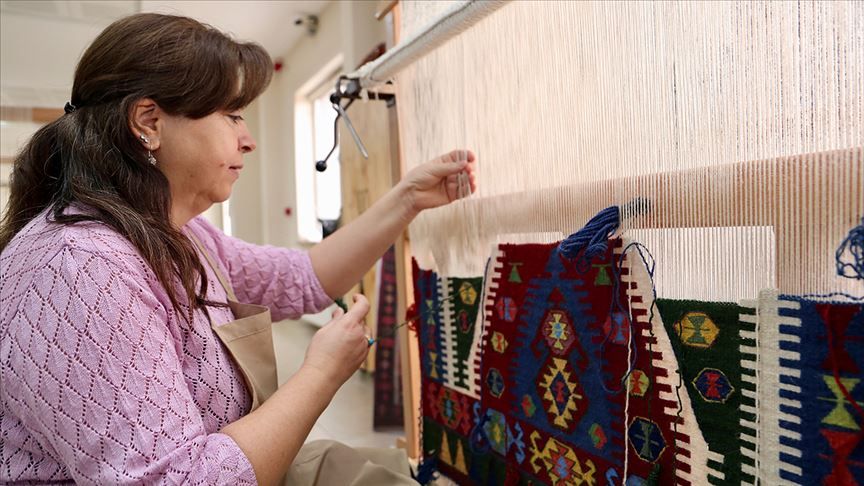
Rug and carpet weaving is a centuries-old art and craft branch of Turkish culture. These woven products constitute an important part of not only Türkiye's but also the world's culture in terms of aesthetics and functionality. Rugs are usually made with the flat weaving technique, while carpets are made with the knot technique. Each carries motifs, colors and patterns specific to a particular geographical region, ethnic identity or historical period. In this article, we will discuss the origins, characteristics, application areas and current importance of Turkish rug and carpet weaving art.
THE ORIGINS OF CARPETS AND RUGS IN TÜRKİYE
Rug and carpet weaving dates back to neolithic times for Turkish culture. This craft was particularly widespread among the Turkic tribes of Central Asia and continued after the Turks migrated to Anatolia. Today, rugs and carpets produced in various regions of Anatolia with different weaving techniques and patterns reflect a historical and cultural accumulation.
MOTIFS AND THEIR MEANINGS
The motifs used in rugs and carpets carry not only aesthetic but also symbolic meaning. For example, human figures holding hands represent unity and solidarity, animal motifs represent protection and strength. Colors also have special meanings; red symbolizes courage, blue symbolizes calmness and green symbolizes fertility.
APPLICATION AREAS AND FUNCTIONS
Turkish rugs and carpets are used not only in homes but also in mosques, palaces and public spaces. They can also be seen as a status symbol, as producing a quality rug or carpet requires a high level of artisanal skill.
THE ART OF WEAVING TODAY: CAPTIVE OF THE MODERN WORLD?
Rug and carpet weaving has undergone many changes due to globalization and industrialization. However, in many Anatolian villages this craft is still practiced in traditional ways. Today, these artifacts are of great interest not only locally but also internationally and play an important role in promoting Turkish culture.


TIME TRAVELING YARNS
Rug and carpet weaving has an important place in Turkish culture and history. With both aesthetic and functional features, these works are the product of a centuries-long tradition of craft and art. As a historical, cultural and aesthetic heritage, they reflect the multi-layered structure and richness of Turkish culture.