


-
THE TRADITION OF LOKMA: A POSTHUMOUS CHARITY IN TURKISH CULTURE
Distributing lokma is a posthumous act of goodwill in Turkish culture with deep historical and spiritual roots. Generally, after the death of a person, his or her family or relatives make lokma dessert for charity and distribute it to the public. This is considered a kind of prayer to the soul of the deceased and symbolizes immortality. It also functions as a social ritual that strengthens the sense of solidarity and unity in the community.
KINDNESS AND THE MORSEL
In Turkish culture, goodness has an important place in every moment of life as well as after death. Distributing Lokma is an expression of social solidarity and charity. The preservation of this tradition is an important part of Turkish culture.
HISTORY OF LOKMAN IN TURKISH CULTURE
With deep historical roots dating back to the Ottoman period, distributing lokma is considered not only a religious ritual but also a social activity in Turkish society. In ancient times, lokma was distributed in mosque courtyards, squares or in front of the deceased's house.
SPIRITUAL DIMENSION
Lokma is a dessert distributed in line with religious beliefs. Especially in Islamic culture, charity and solidarity are of great importance. Distributing Lokma is considered an action in line with these spiritual values and is respected in society.
AS THE DONUT EVOLVES: DISTRIBUTING DONUTS IN MODERN TIMES
Today, distributing donuts can also take place in modern venues and through social media. Although the methods change, the underlying purpose of goodness and remembrance remains the same. With the influence of technology, donuts can reach a wide audience.
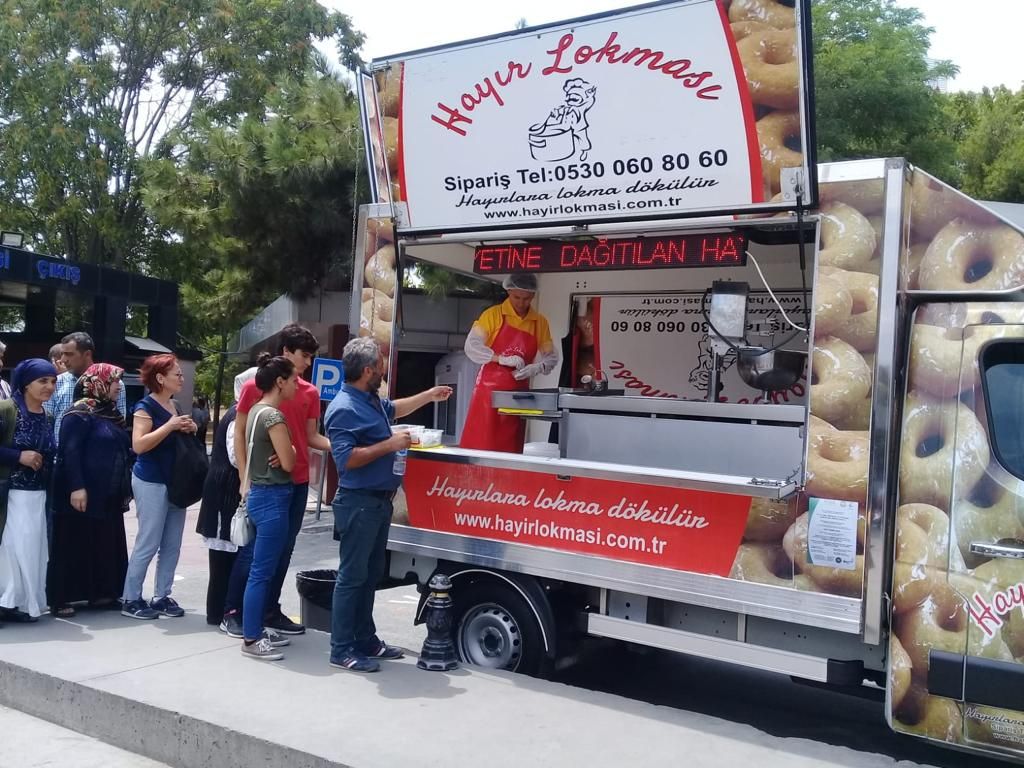


OUR CULTURAL HERITAGE THE CONTINUITY OF LOKMAN
Distributing Lokma has remained a symbol of solidarity and kindness after death in Turkish culture. Even in modern times, the society that continues this tradition protects its cultural and spiritual heritage. Lokma is an element that reflects the values of Turkish culture with its social and religious dimensions, and in this sense, it is a tradition worth carrying into the future.